







What Is a Neon Sign? How Neon Signs Really Work
What Is a Neon Sign? How Neon Signs Really Work
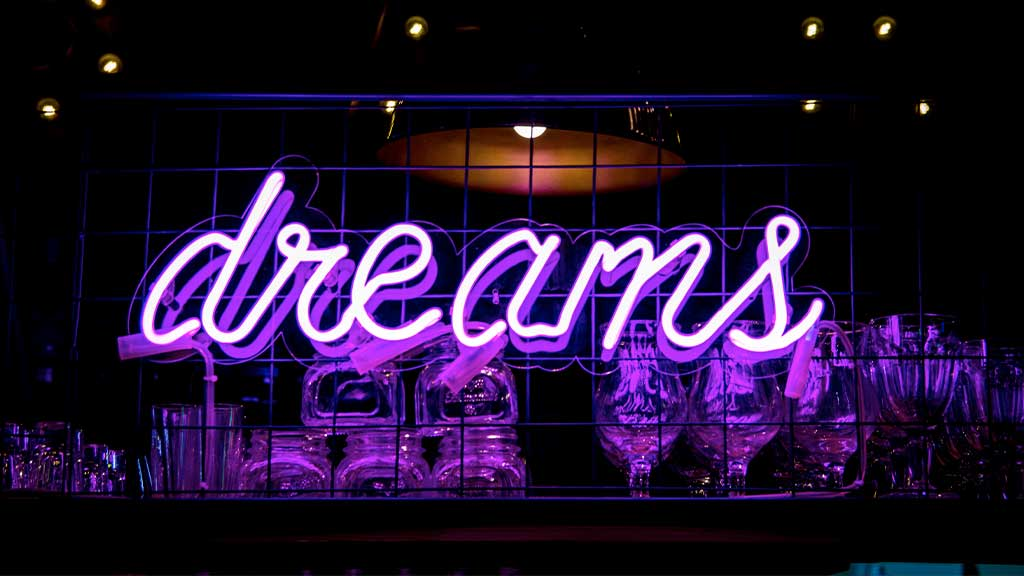
Walk past a tattoo shop, bar, or café at night and your eyes naturally drift toward the glow in the window. Neon signs have a way of pulling attention without trying too hard. They feel alive—almost like the light is moving inside the glass.
But what actually makes a neon sign glow? And why do some look warm and fiery while others glow blue, pink, or green? The answer is simpler than most people think, and also kind of fascinating once you understand what’s happening inside those tubes.
This article breaks it down in plain language: what neon signs really are, how they create color, how they’re made, and how modern LED neon compares to traditional glass neon.
What Is a Neon Sign, Really?
Despite the name, most “neon signs” are not made with neon gas at all.
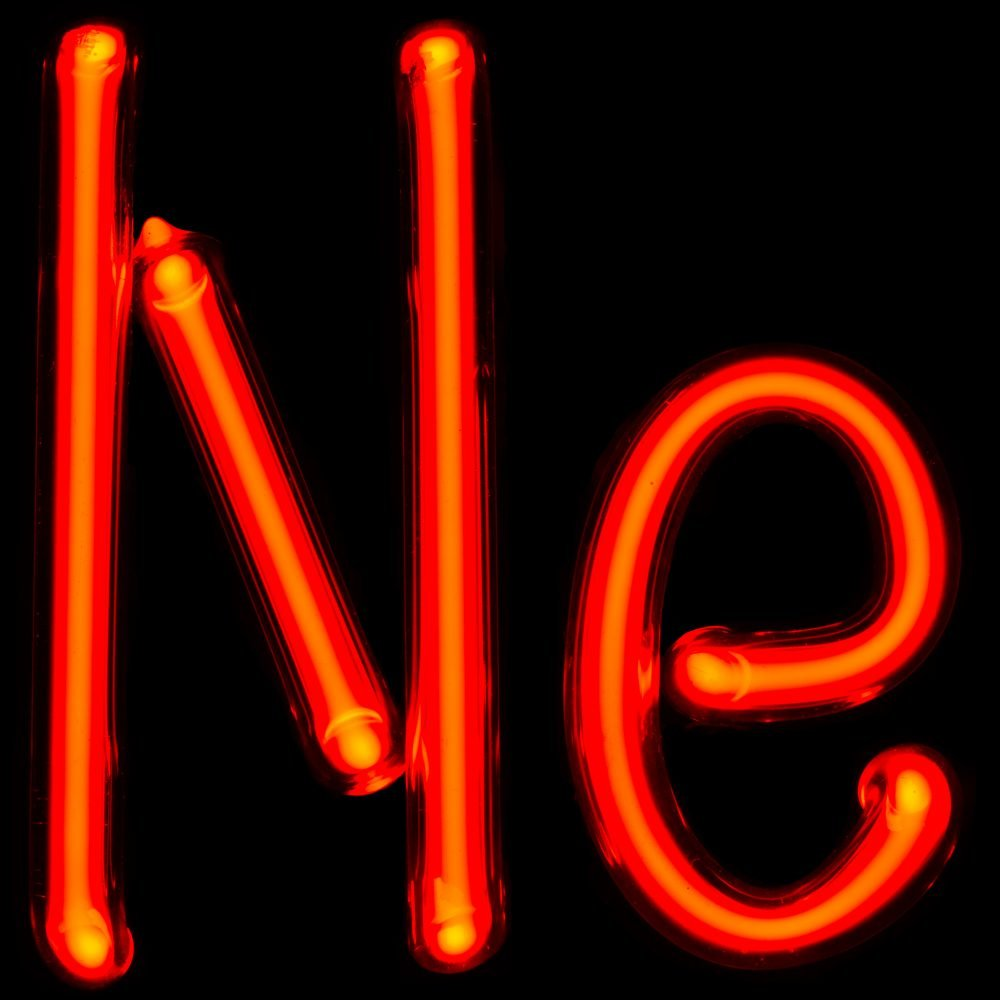
Originally, the term neon sign referred to signs filled with neon gas, which produces a reddish-orange glow. Over time, the name stuck, and now people use “neon sign” to describe almost any glowing tube sign—even when neon gas isn’t involved.
At their core, traditional neon signs are a type of gas-discharge lighting. A sealed glass tube is filled with gas and electricity is passed through it. The gas reacts by giving off light.
Modern custom neon signs, however, are usually made with LED technology inside acrylic tubing, not gas or glass.
How Traditional Neon Signs Actually Work (ELI5 Version)
Here’s the simple version.
-
A glass tube is bent into a shape (letters, symbols, logos).
-
The tube is filled with a specific gas.
-
Electrodes are placed at each end.
-
Electricity flows through the gas.
-
The gas lights up.
What’s happening inside the tube is all about excited electrons.
When electricity flows through the gas, electrons inside the gas atoms get “excited” and jump to a higher energy state. When they fall back to normal, they release energy as light. That light is what you see glowing.
Different gases release different colors.
Why Neon Signs Have Different Colors
Here’s the part most people don’t realize:
Neon gas only produces one color.
That color is a reddish-orange glow.
So how do we get all the other colors?
By using different gases, or coatings inside the tube.
Common gases and their natural colors include:
-
Neon → red-orange
-
Helium → pink
-
Argon → lavender or blue
-
Krypton → pale green
-
Xenon → soft blue
Some signs also use mercury vapor or phosphor coatings to expand the color range even more. Mixing gases and coatings gives artists more control over the final glow.
This is why many vintage “neon” signs aren’t technically neon at all—they’re just using the same lighting principle with different materials.
How Traditional Neon Signs Are Made
Traditional neon sign making is a hands-on craft.
The process usually looks like this:
-
Glass bending
Soft glass tubing is heated with a flame and bent by hand into letters or shapes. -
Cooling and sealing
The shaped glass is cooled and sealed. -
Electrodes added
Metal electrodes are fused onto both ends of the tube. -
Gas filling
Air is removed, and the chosen gas is pumped inside. -
Electrical testing
The tube is connected to a high-voltage transformer to ensure it lights evenly. -
Mounting
Finished tubes are mounted onto a backing panel.
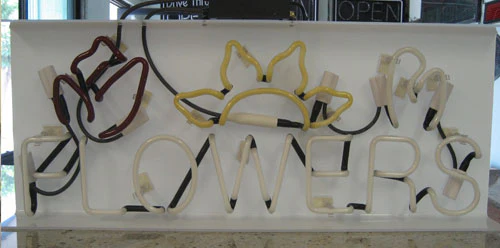
Because this process is manual, fragile, and time-intensive, traditional neon signs are expensive and delicate.
How LED Neon Signs Work (Modern Neon)
Most custom neon signs today are LED neon, sometimes called faux neon.
Instead of glass and gas, LED neon uses:
-
Acrylic or silicone tubing
-
Low-voltage LED strips
-
A solid backing panel (acrylic, wood, or metal)
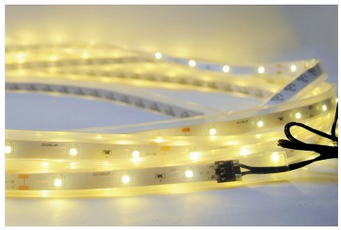
The light comes from LEDs inside the tubing, not gas reactions.
LEDs work by passing electrons through a semiconductor material. When electrons move through it, energy is released as light. When LEDs are placed very close together inside flexible tubing, the result looks surprisingly similar to traditional neon.
How LED Neon Signs Are Designed and Built
The LED neon process is more like manufacturing than glass artistry:
-
The sign design is created digitally.
-
The backing panel is cut by machine.
-
Acrylic or silicone tubing is shaped to match the design.
-
LEDs are installed tightly inside the tubing.
-
The tubing is mounted onto the backing.
-
The sign goes through quality checks before shipping.
This method allows for far more design freedom and consistency than traditional neon.
Benefits of LED Neon Signs vs Traditional Neon
LED neon has largely replaced glass neon for practical reasons.
LED neon advantages:
-
Much lower power consumption (often 80% less)
-
Cool to the touch
-
Lightweight and shatter-resistant
-
Safer (no high-voltage gas)
-
Wider color range
-
Easier to customize
-
Longer lifespan in many cases
Traditional neon still has a certain nostalgic charm, but for most homes and businesses, LED neon is simply easier to live with.
What Are Custom Neon Signs?
Custom neon signs are made to order. Instead of choosing a generic phrase or symbol, you control:
-
Text or logo
-
Font style
-
Size
-
Color
-
Mounting style
-
Indoor or outdoor use
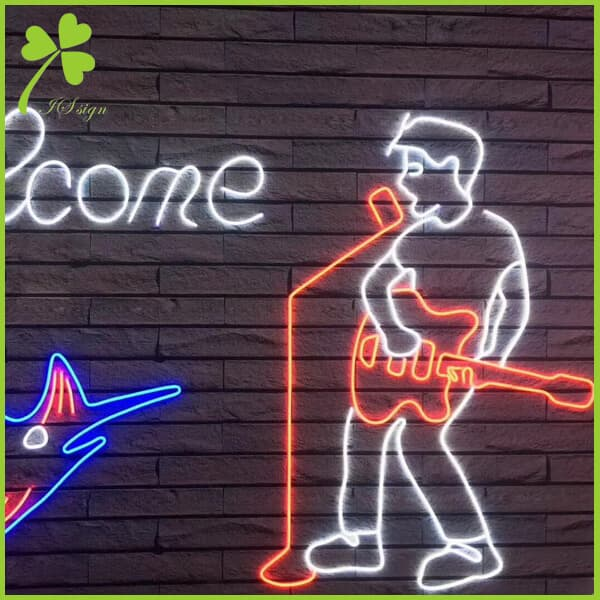
With LED neon, there are very few design limits. Curves, scripts, symbols, and logos are all possible without the structural issues glass neon faces.
This is why custom neon signs are popular for:
-
Storefront branding
-
Events and weddings
-
Home décor
-
Content creators and studios
-
Gift items
What You Need to Prepare for a Neon Manufacturer
You don’t need to be an artist.
Most manufacturers can work from:
-
A rough sketch
-
Typed text
-
A logo file
-
A photo reference
Helpful details to provide include:
-
Desired size
-
Preferred colors
-
Font style (if text-based)
-
Mounting location (wall, window, desk)
-
Power source requirements
Many people start with inspiration from previous designs and refine from there.
Do Neon Signs Use a Lot of Electricity?
Not really.
-
Traditional neon signs usually consume about 60–100 watts, similar to a household light bulb.
-
LED neon signs typically use 15–20% of that amount.
This makes LED neon far more cost-effective for long-term use.
How Long Do Neon Signs Last?
-
Traditional neon signs: 8–15 years with proper care
-
LED neon signs: often longer, depending on LED quality and usage
Avoid leaving signs on unattended for long periods and protect them from electrical surges to extend lifespan.
Do Neon Signs Get Hot?
Traditional neon can become warm due to energy loss as heat.
LED neon stays cool to the touch, which is safer and more efficient.
How to Clean a Neon Sign
Always unplug the sign first.
For LED neon:
-
Use a feather duster for regular dust
-
Soft brush for buildup
-
Lightly damp cloth for stains
For traditional neon:
-
Be extra gentle
-
Avoid pressure on glass
-
Never clean while powered on
How Businesses Use Neon Signs Effectively
Neon signs aren’t just decoration—they’re branding tools.
Businesses use them to:
-
Increase visibility at night
-
Create memorable storefronts
-
Add personality to a space
-
Reinforce brand identity
-
Encourage photos and social sharing
That glowing sign in the window often becomes part of how customers remember the brand.

Final Thoughts
Neon signs may look magical, but the science behind them is surprisingly simple. Whether it’s glowing gas inside glass or LEDs inside acrylic, the goal is the same: light that feels alive.
Understanding how neon signs really work makes it easier to choose the right option—especially when designing a custom neon sign that fits your space, budget, and purpose.
If you’re drawn to neon, it’s not just about brightness. It’s about atmosphere, identity, and that unmistakable glow that refuses to be ignored.