



Neon vs LED Neon Signs: What’s the Real Difference?
If you’re looking into a custom neon sign—whether for a business, an event, or your own space—you’ll quickly run into two options that sound similar but behave very differently: traditional glass neon and LED neon (often called LED neon flex or faux neon).
At first glance, both glow, both look eye-catching, and both are used for signs, logos, and wall art. But once you go past appearances, the differences start to matter—a lot. Cost, safety, installation, design freedom, and long-term use all shift depending on which one you choose.
This article breaks down what really separates neon from LED neon, without hype or nostalgia bias, so you can make a decision that fits how you’ll actually use the sign.
What Traditional Neon Signs Are Really Made Of
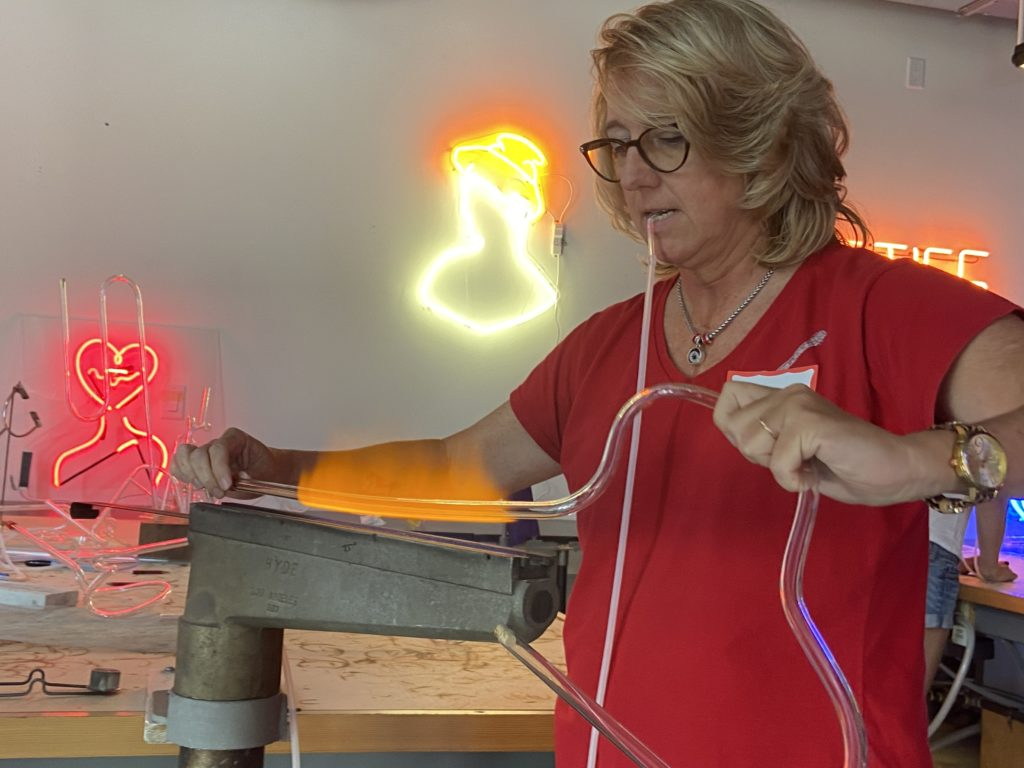
Classic neon signs are a physical craft. Each sign is built from glass tubes, heated and bent by hand into letters or shapes. These tubes are then filled with gas—neon is just one option, despite the name. Different gases and coatings create different colors.
At each end of the tube, metal electrodes connect to a high-voltage transformer, which sends electricity through the gas. When the gas becomes energized, it glows. The finished tubes are mounted onto a metal, wood, or aluminum framework to hold everything in place.
This process is labor-intensive and highly skilled. It’s also the reason glass neon has that soft, organic glow people associate with vintage signage.
What LED Neon Signs Are Made Of
LED neon signs don’t use glass or gas at all.
Instead, they rely on LEDs housed inside acrylic or PVC tubing, usually mounted to a clear or colored backing panel. The tubing diffuses the light so that, from a distance, it looks like a continuous glowing line rather than a string of individual bulbs.
Inside the tube, LEDs are placed very deliberately. Too many LEDs packed too closely can create harsh “hot spots.” Too few, or spaced poorly, and you’ll see dark gaps. When done correctly, LED neon produces a smooth, even glow that mimics traditional neon surprisingly well.
The key difference: this glow comes from semiconductors, not energized gas.
Appearance: Vintage Glow vs Modern Precision
Aesthetics are often the first thing people argue about.
Traditional neon has a warm, slightly imperfect glow. Some people love the subtle buzz, the gentle falloff of light, and the handmade feel. For certain bars, tattoo shops, or retro-themed businesses, that look is part of the identity.
LED neon, on the other hand, feels cleaner and sharper. Lines are more precise. Colors are more consistent. The sign tends to photograph better, especially in mixed lighting or daylight.
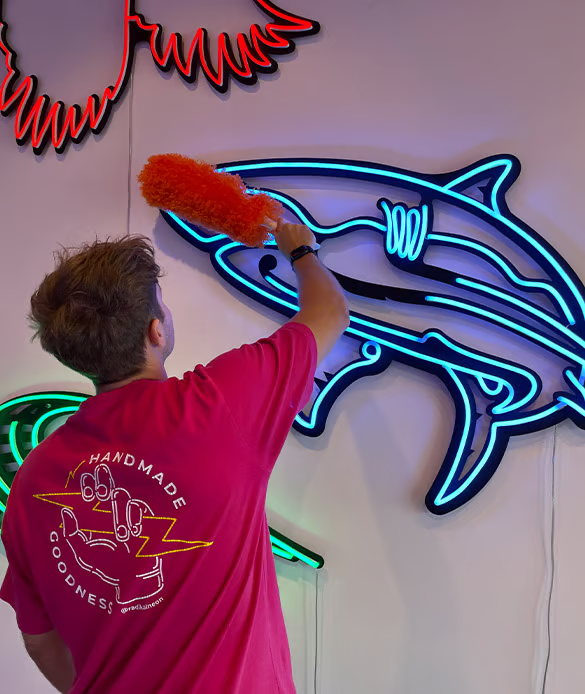
Neither is “better” universally—it depends on the mood you’re trying to create. But it’s worth noting that many people who assume they want glass neon end up choosing LED once they see how polished modern LED signs have become.
Brightness and Visibility
This is where LED neon has a clear technical advantage.
LED neon signs are brighter overall and remain visible in daylight. They can also be dimmed down significantly, giving you flexibility depending on the environment.
Glass neon tends to shine best at night. During the day, especially outdoors or near windows, it can look muted by comparison.
If visibility and readability matter—storefronts, trade shows, photo backdrops—LED usually performs better.
Cost: Upfront and Long-Term
When people compare prices, they often focus only on the purchase cost. But signage is a long-term investment.
| Traditional neon: |
Costs more to manufacture |
Requires professional installation |
Needs specialized repair if damaged |
Typically has higher energy usage |
| LED neon: |
Cheaper to produce and buy |
Can be installed like wall art |
Rarely needs maintenance |
Uses far less electricity |
Over time, LED neon is almost always the more cost-effective option, especially for larger signs or commercial use.
Energy Use and Running Costs
Glass neon operates at very high voltages. LED neon runs on low-voltage DC power.
That difference shows up on your electricity bill. LED neon can be up to 80–90% more energy efficient, depending on size and usage. It also produces very little heat, which matters for indoor use or long operating hours.
For businesses running signs daily, this isn’t a small difference—it adds up fast.
Safety and Practical Use
Safety is often overlooked until something goes wrong.
| Glass neon: |
Fragile and breakable |
Can get warm during operation |
Contains small amounts of mercury |
Requires careful handling and installation |
| LED neon: |
Shatter-resistant |
Cool to the touch |
No gas, no mercury |
Safer for homes, events, and public spaces |
This is why you rarely see glass neon in homes—and almost never in children’s rooms. LED neon, by contrast, is commonly used as indoor wall art because it’s lightweight and low-risk.
Portability and Events
If you plan to move your sign at all—weddings, pop-ups, exhibitions, parties—traditional neon becomes impractical very quickly.
Glass neon is heavy, fragile, and expensive to ship safely. LED neon signs are light, durable, and easy to transport. Many can be packed, shipped, and rehung multiple times with minimal risk.
That portability alone makes LED neon the default choice for events.
Design Flexibility and Customization
Glass tubes can only bend so far before they break. This limits how tight curves and small details can be.
LED neon tubing is far more flexible. That allows:
-
Tighter bends
-
More complex logos
-
Cleaner lettering
-
Easier replication of brand designs
LED neon also supports effects like dimming, flashing, and color changes—things that traditional neon simply can’t do once it’s made.
For custom neon signs, this flexibility often means fewer compromises between design and reality.
Maintenance and Lifespan
A typical glass neon sign lasts around 10,000 hours before maintenance becomes likely.
LED neon signs often exceed 100,000 hours of use with little to no upkeep. There’s no gas to leak, no glass to crack, and no specialist needed for routine care.
If reliability matters more than nostalgia, LED wins here comfortably.
So… Which One Is Actually Better?
There’s no universal answer—but there is a practical one.
If you value:
-
Authentic vintage character
-
Soft, traditional glow
-
Craftsmanship history
Glass neon may still appeal to you.
If you care about:
-
Cost
-
Safety
-
Energy efficiency
-
Easy installation
-
Custom design freedom
LED neon is almost always the smarter choice.
That’s why, today, most custom neon signs are made using LED neon—even when the goal is to recreate a classic neon look.
Final Thoughts
The debate between neon and LED neon isn’t really about which one looks better. It’s about how the sign will be used, where it will live, and what problems you want to avoid over time.
Understanding the real differences helps you choose with confidence—without relying on buzzwords or nostalgia alone.