







Indoor vs Outdoor Neon Signs: What’s the Difference?
Quick Answer (For Readers in a Hurry)
Indoor neon signs are designed for dry, stable environments, while outdoor neon signs are built to handle weather, sunlight, and moisture.
The difference is not mainly how they look, but how well they resist environmental stress.
Using the wrong type often leads to fading, electrical issues, or early failure, especially in semi-outdoor spaces.
Neon signs are no longer limited to bars or storefront windows. Today, they appear in homes, offices, cafés, studios, and outdoor business spaces. While indoor and outdoor neon signs may look similar at first glance, they are designed for very different conditions, and using the wrong type often causes problems that are not immediately obvious.

This article explains the real, practical differences between indoor and outdoor neon signs, focusing on design intent, durability, limitations, and real-world use
What “Neon Signs” Usually Mean Today
When people talk about neon signs today, they are usually referring to LED neon signs, not traditional gas-filled glass neon.
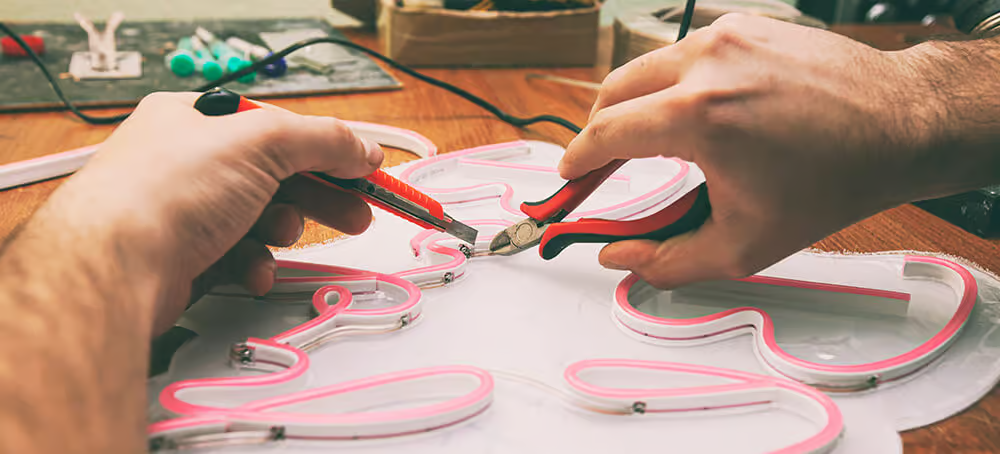
LED neon signs use flexible silicone or PVC tubing with internal LED strips. They recreate the glow of classic neon while using less power and offering better safety. Both indoor and outdoor neon signs commonly use this technology—the key difference lies in how the sign is built for its environment, not the lighting method itself.
Indoor Neon Signs: Design, Use Cases, and Limitations
Indoor neon signs are made for controlled environments where temperature, humidity, and exposure remain relatively stable.
Typical Characteristics
-
Designed for dry, enclosed spaces
-
Lightweight construction
-
Bright enough for close viewing
-
Simple power adapters and wiring
Their primary role is visual styling rather than long-distance visibility.
Common Indoor Use Scenarios
-
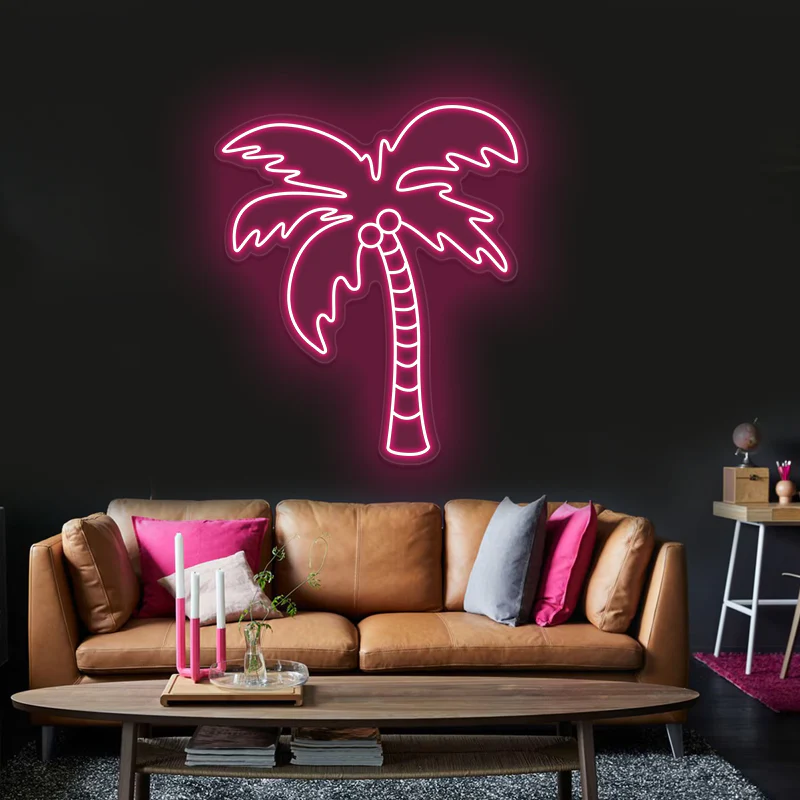
Bedrooms and living rooms
-
Home offices and gaming setups

-
Cafés, salons, and studios

-
Event backdrops and interior branding

Real-World Limitations of Indoor Neon Signs
This is where many people get it wrong. Indoor neon signs often look sturdy, but they are not designed to handle environmental stress.
Common issues include:
-
Failure when placed near open windows or balconies with high humidity
-
Faster aging when installed near kitchens or bathrooms due to steam
-
Silicone tubing discoloring after long-term sunlight exposure
-
Power adapters that are not sealed against moisture
On paper, indoor signs may seem suitable for semi-outdoor use. In practice, this is one of the most common reasons neon signs fail prematurely.
Outdoor Neon Signs: Weather Resistance and Real-World Durability
Outdoor neon signs are designed with exposure in mind. Their construction accounts for weather, sunlight, dust, and longer daily operating hours.

Typical Characteristics
-
Weather-resistant or waterproof construction
-
UV-resistant tubing materials
-
Sealed connectors and power supplies
-
Reinforced mounting systems
These features allow outdoor signs to remain functional in changing conditions.
Common Outdoor Use Scenarios
-
Storefront signage
-
Restaurants and bars
-
Outdoor-facing windows
-
Event spaces and building façades
Practical Downsides of Outdoor Neon Signs
Outdoor-rated does not mean flawless.
Some realistic drawbacks include:
-
Higher cost due to protective materials
-
Slightly bulkier appearance
-
Installation may require more planning
-
Brightness levels can feel excessive indoors
Durability also varies by climate and usage. Not all outdoor signs perform equally in extreme heat or constant direct sunlight.

Indoor vs Outdoor Neon Signs at a Glance
-
Environment: Indoor signs assume stable conditions; outdoor signs are built for exposure
-
Brightness: Outdoor signs prioritize visibility; indoor signs focus on comfort
-
Durability: Outdoor signs last longer in harsh environments
-
Cost: Outdoor signs are usually more expensive
-
Flexibility: Indoor signs are easier to move and redecorate
This comparison alone often helps clarify which type is appropriate.
Can an Outdoor Neon Sign Be Used Indoors?
Yes, but there are trade-offs.
Outdoor neon signs can be safely used indoors, especially in larger spaces. However:
-
They may feel visually harsh in small rooms
-
Mounting hardware can look industrial
-
The extra durability may offer no practical benefit indoors
In short, outdoor signs can work indoors, but indoor signs usually do not work outdoors.
Which One Should You Choose Based on Real Use Scenarios?
The best choice depends on where the sign will actually be used—not where it looks best in photos.
-
Fully indoor spaces with stable conditions
→ Indoor neon signs are usually sufficient -
Near windows, balconies, or semi-outdoor cafés
→ Outdoor-rated signs reduce long-term risk -
Uncertain placement or future relocation
→ Outdoor-rated signs offer flexibility but cost more
Choosing incorrectly often leads to replacement costs that outweigh the initial savings.
Common Misconceptions About Neon Signs
A common misconception is that LED neon signs are automatically weatherproof. Many are not.
Another assumption is that indoor and outdoor neon signs differ only in price. In reality, the differences include wiring protection, power design, materials, and long-term reliability.
Ignoring these distinctions can lead to safety concerns or shortened lifespan.
Final Thoughts
The difference between indoor and outdoor neon signs is not cosmetic—it is functional.
Indoor neon signs are designed for controlled environments and visual styling. Outdoor neon signs are built for endurance and exposure. Using the wrong type often results in fading, electrical issues, or early failure.
Understanding these differences helps set realistic expectations and avoids unnecessary replacements over time.
Frequently Asked Questions
Can indoor neon signs survive under covered outdoor areas?
Sometimes, but it is risky. Even covered areas often have humidity and temperature changes that indoor signs are not designed to handle.
Do outdoor neon signs consume more electricity?
Not necessarily. Power consumption depends more on size and brightness than whether a sign is rated for indoor or outdoor use.
Are outdoor neon signs too bright for indoor spaces?
They can be. In small rooms, outdoor-rated signs may feel overly intense unless brightness is adjustable.
How long do indoor and outdoor neon signs usually last?
Lifespan depends on usage and environment. Indoor signs last longer indoors, while outdoor signs generally last longer in exposed conditions.
Are LED neon signs safer than traditional glass neon?
Yes. LED neon signs operate at lower voltages and are less fragile, making them safer for most residential and commercial settings.